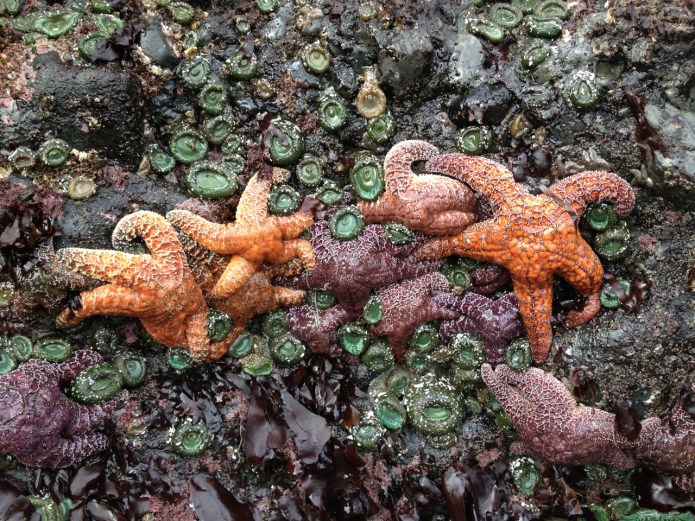
 It’s thought that these trees were casualties of a major subsidence event (this is where the ground level drops suddenly to fill a void beneath), sparked by a massive quake along the Cascadia fault line around 400 AD. The trees quickly died and rotted away—except for the root structure and 6-7 feet of trunk. This part of the trees was preserved in the dense sand that covered them up soon after (in fact, the nutrient-rich forest floor the trees grew in is preserved beneath the sand too). But whereas before the sand had always returned–carried ashore by the prevailing summer currents–to cover the exposed stumps, after 1998 the stumps remained exposed. For the first time in 1,600 years, the stumps are weathering 15 years of continuous exposure, deteriorating in the elements. They are covered in barnacles, pounded by the relentless surf and tide. Scientists aren’t sure why, only that this period of exposure is unique. The leading hypothesis is our changing climate.
Important information prior to exploring.
Sneaker Waves
A sneaker wave (sometimes also referred to as a sleeper wave) is a disproportionately large coastal wave that can sometimes appear in a wave train without warning. The terminology itself is popular rather than scientific: there is no scientific coverage (or evidence) of the phenomenon as a distinct sort of wave with respect to height or predictability—like there is on other extreme wave events such as rogue waves. Because they are much larger than preceding waves, sneaker waves can catch unwary swimmers, washing them out to sea. It is not uncommon for people walking or standing on beaches and ocean jetties to also be washed into the sea. Sneaker waves are mainly referred to in warnings and reports of incidents for the coasts of Northern California, Oregon and Washington in the United States.
Tide Chart Link
Knowing the tides is key to exploring the tidal pools. And for your general safety on the beach. 
Tidal Pools at Low Tide
This link will bring you to a series of educational videos on the tidal pools and safely exploring.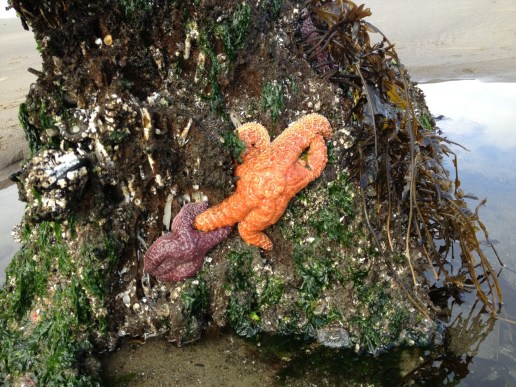
Starfish on tree stump during negative tide.
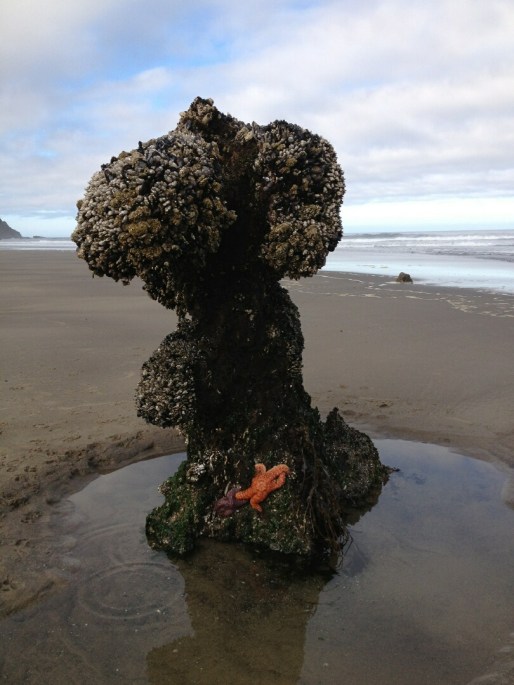
Ghost Forest Tree at extreme low tide. Neskowin Oregon.
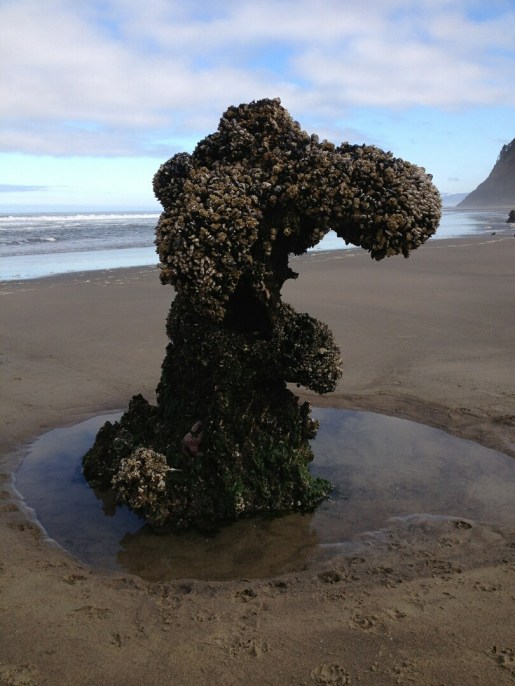
Barnacle encrusted tree exposed during negative tide.
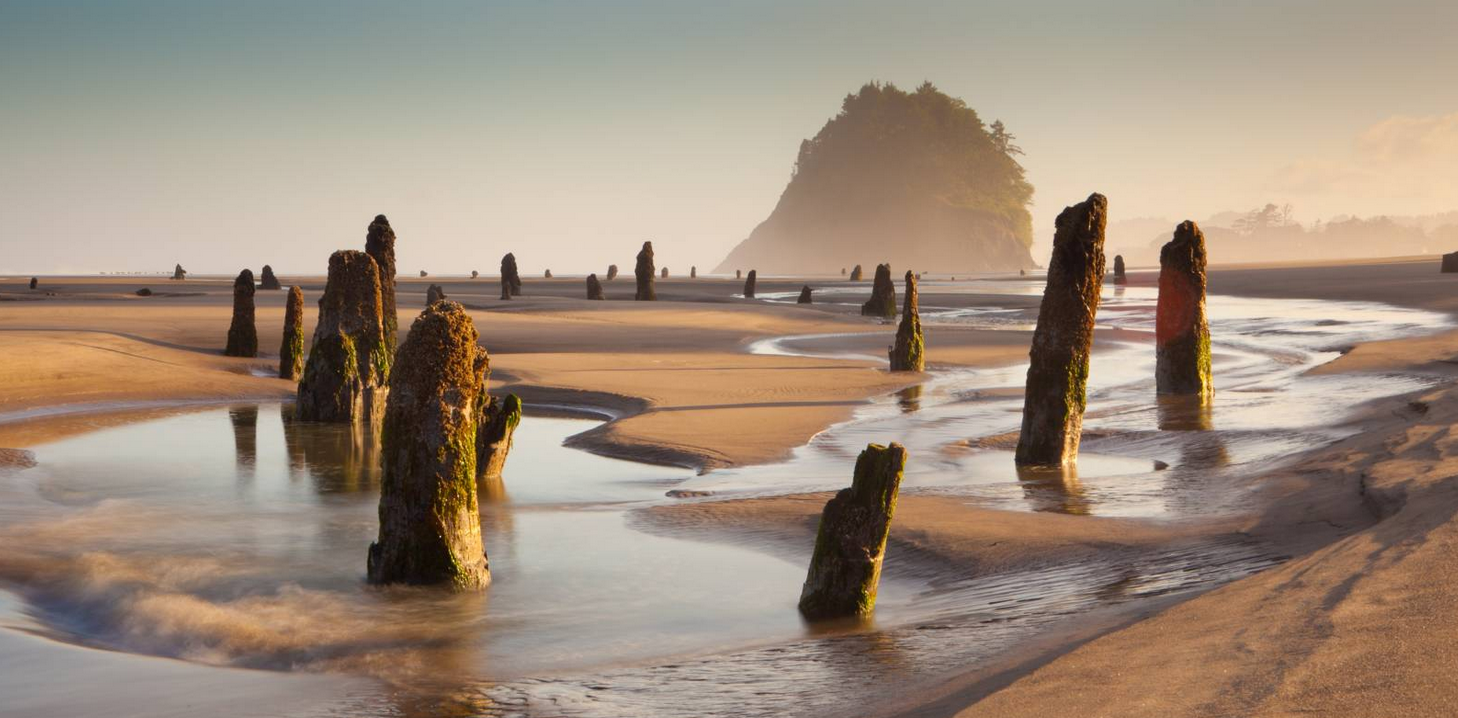
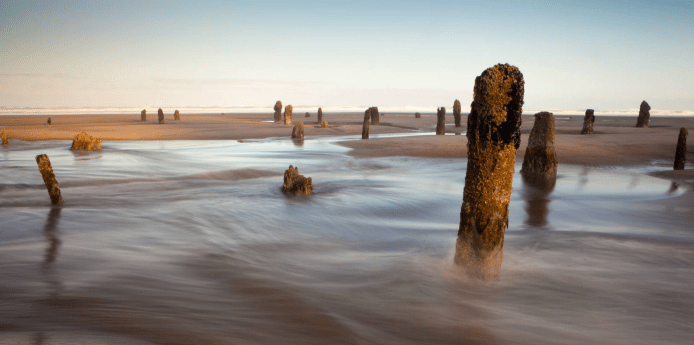 Photo Credit: Race Jones www.facebook.com/racejonesphotography
![20150113_141616[1]](https://tidaltravels.me/wp-content/uploads/2015/01/20150113_1416161.jpg)

 Tidal Travels